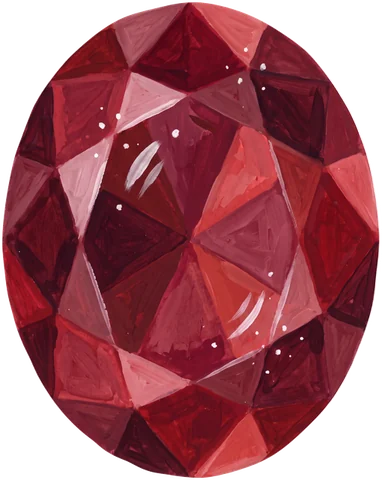
What does garnet mean?
Garnet is the stone of good health, wealth and happiness, or so some believe. In ancient and medieval times, gems like it were also thought to soothe an angry heart.
The clergy and nobles of the Middle Ages favored red garnets, and in ancient Rome, garnet signet rings stamped the wax that sealed important documents.
Pomegranate
Garnet comes from the medieval Latin granatus, for the red of the pomegranate’s seeds.
What color is the January birthstone?
Red, most often, from purple-red to orangy red. But garnet is really a family of minerals, and between them they come in orange, yellow, purple and a vivid green.
There are even garnets that change color, from blue in one light to purple in another.
Where does garnet come from?
Today much of the world’s garnet comes from Africa. Kenya, Tanzania and Madagascar supply most of the bright green tsavorites, and Namibia and Tanzania the orange spessartines.
In Victorian times, the red garnets everyone wanted came from Bohemia, now part of the Czech Republic.
How to care for a garnet
Garnets sit at 6.5 to 7.5 on the Mohs scale, softer than diamonds, rubies and sapphires. That makes them lovely for earrings, pendants and brooches, though not every garnet is made for daily wear.
Clean a garnet with warm soapy water and a soft brush, and skip the steam cleaner. Store it apart from harder gems so it doesn’t get scratched.
The five garnets used as gems
Garnet is a group of minerals, and five of them matter as gems. Each is a January birthstone.
| Color | |
|---|---|
| Pyrope | Purple to red (its name means “fiery-eyed”) |
| Almandine | Purple to red |
| Spessartine | Orange and yellow |
| Andradite | Yellow to green, including demantoid |
| Grossular | Colorless to orangy red, and the vivid green tsavorite |
Most garnets are not treated, so the color you see is the color it grew with.
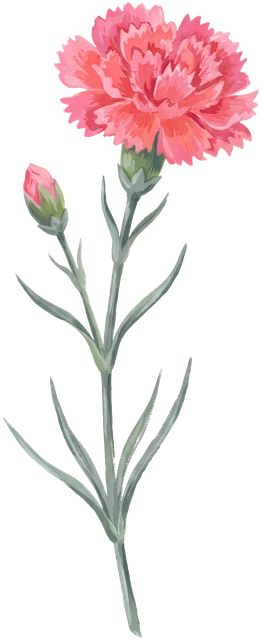 January’s birth flowers: carnation and snowdropWhat they mean, and how to send it →