Poinsettia: the Christmas flower
Good cheer, and the Star of Bethlehem
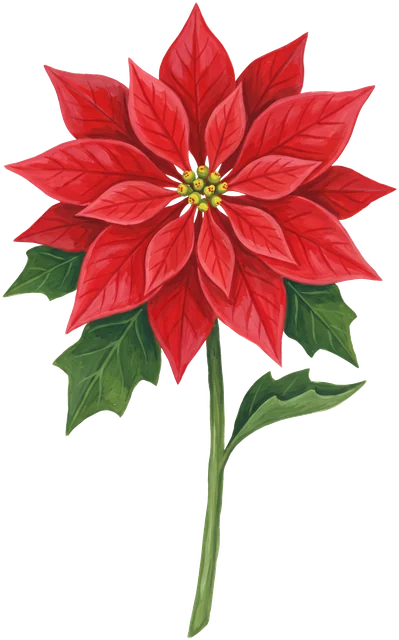
When people say "the Christmas flower", they mean the poinsettia. Its red star is not a flower at all: those are bracts, colored leaves around the true flowers, the small yellow buttons in the middle. The star shape is why it came to stand for the Star of Bethlehem, and red for the season itself.
It grows wild in Mexico, where the Aztecs called it cuetlaxochitl and Mexican Christians later named it Flor de Nochebuena, the Christmas Eve flower. Joel Roberts Poinsett, the first US minister to Mexico, sent cuttings home to South Carolina in the late 1820s, and the plant took his name. National Poinsettia Day, December 12, marks the day he died.
Keep it in bright, indirect light, away from cold drafts and radiators, and water when the top of the soil feels dry. Never leave it standing in water.
Holly: green through the winter
Protection, peace and goodwill
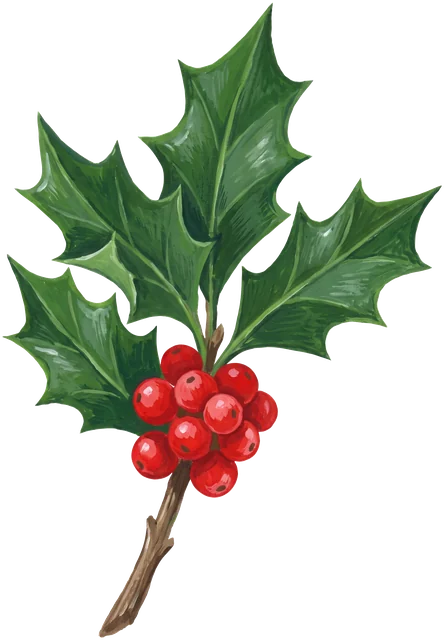
Holly stays glossy and green when everything else is bare, so midwinter festivals brought it indoors long before Christmas did. Christians kept the habit and gave it new meanings: the spiked leaves for the crown of thorns, the red berries for sacrifice.
Hung on a door, it has always been a wish for the house: protection, peace, a welcome for whoever knocks. That is also why it ends up in wreaths. Holly is one of December's two birth flowers, with the paperwhite narcissus.
Only the female plants carry berries. Cut sprigs last about a week indoors, longer somewhere cool.
Mistletoe: why we kiss under it
Love, friendship and making up
Mistletoe grows high in the branches of other trees and stays green all winter, which made it look magic to people who watched it. The Roman writer Pliny the Elder described druids cutting it from oak trees with great ceremony, and Norse myth tied it to the god Baldr.
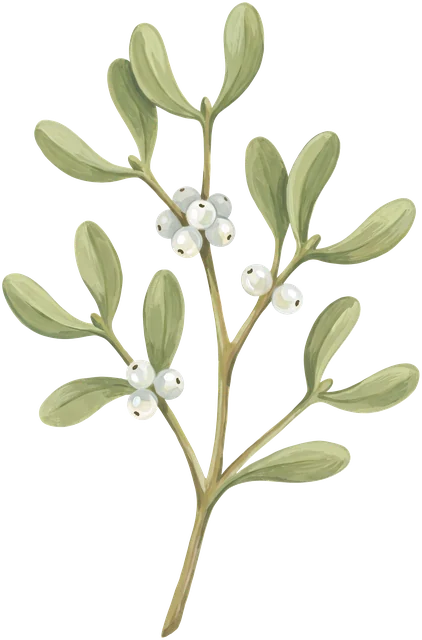
Kissing under it is an English Christmas custom, kept alive by Victorian households. The old rule says to pick one berry for each kiss, and when the berries are gone, so are the kisses. Today it stands for love and friendship, and for making up after a quarrel.
Hang it high, in a doorway, and put a dish under it: the berries drop, and they should not be eaten.
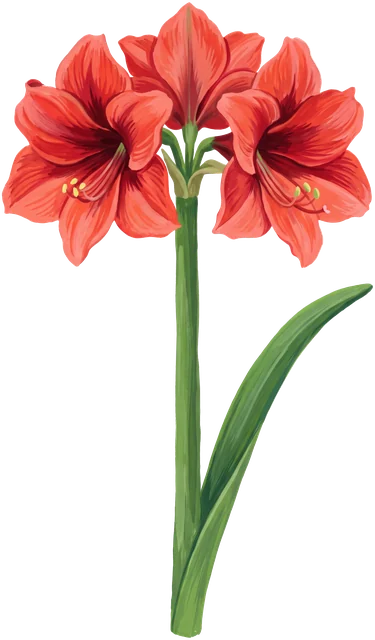
Amaryllis: the bulb that blooms for Christmas
Pride, strength and radiant beauty
The amaryllis sold at Christmas is a Hippeastrum from South America: one fat bulb, one tall stem, and three or four trumpets as big as a hand. It flowers indoors in the dark of winter, which is exactly why it became a Christmas plant.
The name comes from a Greek word meaning to sparkle, and its meanings are big ones: pride, strength, a beauty that does not try to hide. It is a good gift for someone who has had a hard year and come through it.
A bulb potted in early November usually flowers by Christmas. Turn the pot every few days so the stem grows straight.
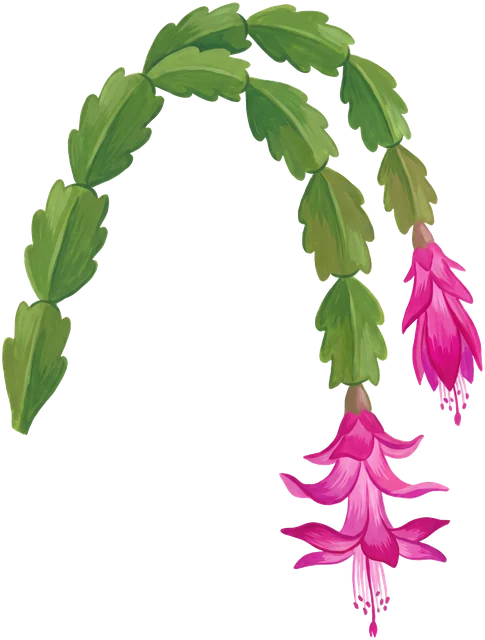
Christmas cactus: the one that is safe for pets
Endurance, and a plant passed down
Not a desert cactus at all: it comes from the coastal mountains of Brazil, where it grows on trees in the shade. It flowers when the nights get long and cool, which in the northern half of the world means the weeks around Christmas.
It can live for decades, and many families have one that came from a grandmother's cutting. So it has come to mean endurance, and the kind of gift that gets handed on. Many plants sold as Christmas cactus are really its cousin, the Thanksgiving cactus, which has pointed teeth on its leaf segments instead of rounded ones.
Give it bright indirect light and let the soil dry a little between waterings. Long, dark nights in autumn bring on the buds.
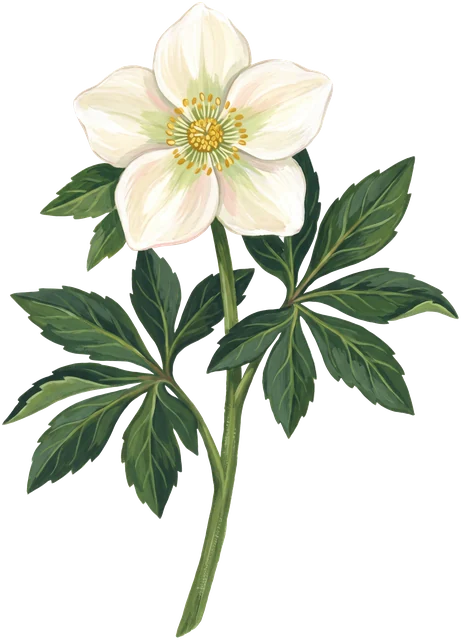
Christmas rose: a flower in the snow
Hope, peace and comfort
The Christmas rose is a hellebore, from the buttercup family, not a rose. It opens white flowers in the middle of winter, sometimes straight through the snow, in the mountains of central Europe.
An old legend tells of a shepherd girl with no gift for the Christ child, crying in the snow, until an angel brushed the snow aside and showed her these flowers to bring instead. It has stood for hope ever since, and it is a gentle flower to send someone who is grieving at Christmas.
Outdoors it is a tough, long-lived perennial in part shade. Indoors as a pot plant, keep it cool and plant it out after the holidays.
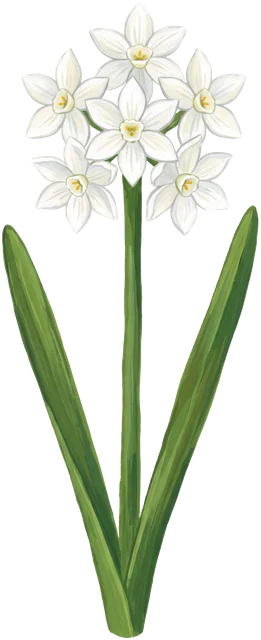
Paperwhite: a narcissus that needs no winter
Hope, and new beginnings
Most narcissus bulbs need a cold winter before they flower. Paperwhites do not: set them on pebbles and water and they start growing at once, with sweet-scented clusters of white stars about three to four weeks later.
That speed makes them the easiest Christmas flower to grow yourself, and a lovely thing to give still in bud. Like every narcissus they stand for hope and new beginnings, and they are December's birth flower, together with holly.
Plant a pot every two weeks from mid-November for flowers right through to the new year. Keep them cool so they do not flop.
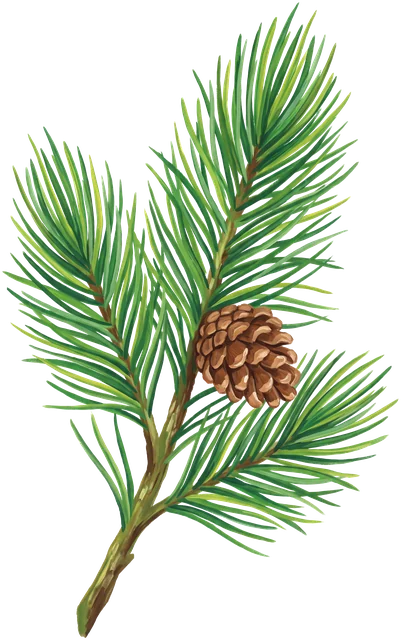
Evergreens: the oldest Christmas green
Everlasting life, and the green coming back
Long before there were Christmas trees, people brought evergreen branches indoors at midwinter as a promise that the green would come back. The decorated tree itself grew out of German customs and spread across Europe and America in the 1800s.
Pine, fir and spruce still carry that first meaning: life that lasts through the dark, and hope that does not need a reason. A pine cone on a gift tag says it quietly.
A cut tree drinks a lot in its first days. Keep the stand topped up, and away from heaters.
Which Christmas flowers are safe for cats and dogs?
Only one of the eight is truly safe: the Christmas cactus. The rest range from mildly irritating to properly toxic, so set them high or skip them in a house with a puppy or a curious cat. From the ASPCA's plant list:
| For pets | If eaten | |
|---|---|---|
| Poinsettia | Mildly toxic | Irritating to the mouth and stomach, sometimes vomiting. The ASPCA calls it "generally over-rated in toxicity". |
| Holly | Toxic | Vomiting, diarrhea and lethargy. The leaves and berries are low in toxicity, but keep them out of reach. |
| Mistletoe | Toxic | Vomiting and diarrhea; rarely a low heart rate or low blood pressure. One of the riskier ones. |
| Amaryllis | Toxic | Vomiting, diarrhea, drooling, tremors. The bulb is the worst part. |
| Christmas cactus | Safe | Non-toxic to dogs and cats, according to the ASPCA. The best choice for a house with pets. |
| Christmas rose | Toxic | Drooling, stomach pain, diarrhea. Every part of the plant, including the sap. |
| Paperwhite | Toxic | Vomiting, drooling, diarrhea; large amounts are serious. The bulbs are the most poisonous part. |
| Evergreens | Mildly irritating | Needles can upset a stomach if chewed; keep pets from drinking the water in the tree stand. |
If a pet has eaten part of a plant, call your vet or the ASPCA Animal Poison Control Center at (888) 426-4435.